The cheapest packing upgrade is often removing something
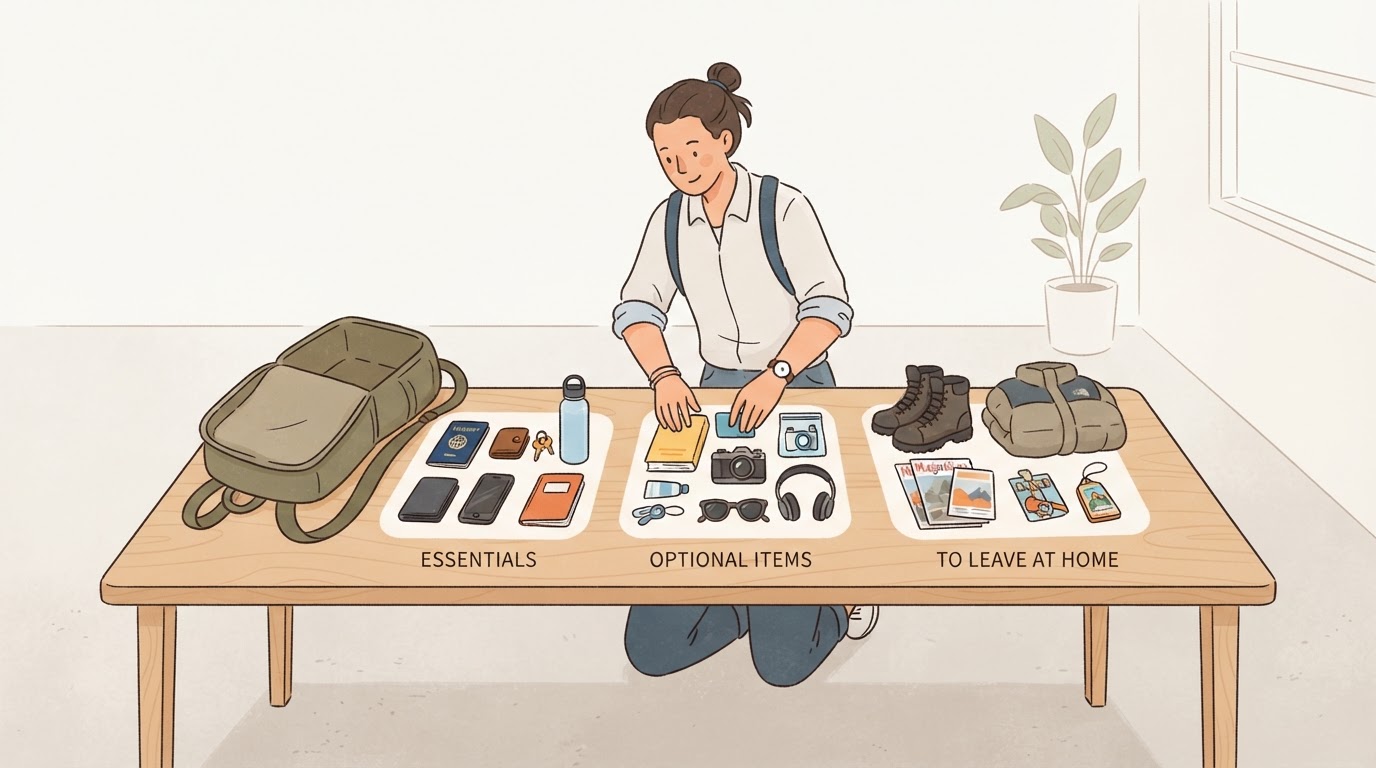
When a weekend backpack will not close, it’s tempting to buy compression organizers or pay for another bag. But the first question is whether every item needs to travel at all. A two-night trip is a good opportunity to use a simple keep, conditional and leave-behind method.
This is not a universal airline baggage allowance guide. Personal-item dimensions, weight rules and enforcement differ by airline, fare and route. Check your actual booking and carrier’s current policy before you pack; never rely on a generic backpack size.
Make three piles before putting anything inside
| Keep | Conditional | Usually leave behind |
|---|---|---|
| Travel documents, medication, phone, essential chargers | Second shoes, extra outerwear, laptop | Duplicate chargers, full-size toiletries when not needed |
| Weather-appropriate clothes and basic hygiene | Camera gear, hair tools, bulky accessories | Multiple outfits for the same activity |
Items in the last column are examples, not rules. Medical needs, work requirements and weather can make an otherwise optional item essential. Keep medication and important documents accessible and follow applicable security rules.
Plan by activities, not by the number of days
Write down what you will actually do: travel, sightseeing, dinner, sleeping and returning home. Choose clothing that works for more than one activity. Wear your bulkiest appropriate layer while traveling rather than packing it, provided you can comfortably manage changing temperatures. If rain is forecast, a compact rain layer may be more useful than an extra fashion outfit.
Use a volume test before buying an organizer
- Pack your non-negotiable items first.
- Add one complete clothing change and necessary hygiene items.
- Place heavier objects close to your back and keep frequently used items accessible.
- Close the backpack without forcing the zip or distorting the bag.
- Compare the packed bag with your carrier’s stated dimensions and weight rules.
If the bag still overflows, remove the lowest-value conditional item. Compression bags may make soft clothing smaller, but they do not reduce weight or change an airline’s limits. Our packing cubes versus compression bags comparison explains when each helps.
Don’t make toiletries the hidden problem
Small, tightly sealed containers can be easier to manage than large bottles. Keep liquids separate from electronics and check airport security restrictions for the airports on your route. A toiletry organizer is optional: a clean, leak-resistant pouch may be sufficient. For a step-by-step packing method, read our carry-on toiletry leak-prevention guide.
When paying for baggage actually makes sense
Extra baggage can be reasonable if you must carry specialized equipment, clothing for unpredictable weather, or items that cannot be reduced safely. Compare the actual fee with the cost and inconvenience of leaving something behind or obtaining it at the destination. Do not spend money on multiple accessories merely to avoid a legitimate baggage charge.
For a ready-to-use two-night clothing checklist, see our personal-item weekend packing guide. The goal is a comfortable, compliant bag—not a photographically perfect minimalist packing layout.
Leave a Reply