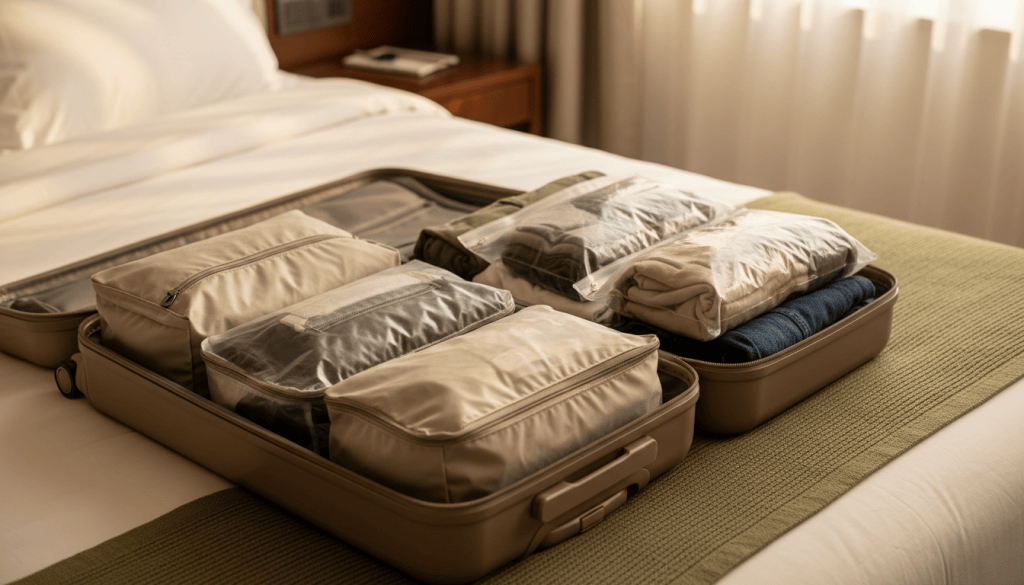
Compare packing cubes and compression bags for organization, bulk reduction, wrinkles, airline weight limits, and easy access while traveling.
They solve different problems
Packing cubes mainly divide clothing into accessible groups. Compression bags aim to reduce the volume of soft items by squeezing out air or using a compression zipper. Neither reduces the actual weight of your belongings. That distinction matters when an airline imposes a carry-on weight limit.
When ordinary packing cubes win
Choose simple cubes when you want to separate tops, underwear, workout clothing or clean and worn items. They make it easier to unpack and repack without disturbing everything else. Look for durable zippers, washable fabric and dimensions that fit your bag rather than buying the largest set available. A cube that is too tightly packed may become awkward to stack.
When compression can help
Bulky, compressible fabrics such as some sweaters and soft layers may take less space after compression. The result varies with fabric, bag design and how much air can be expelled. Compression can also create dense blocks that are harder to fit around a bag’s corners. Do not assume the advertised space-saving percentage applies to your clothing.
Trade-offs you should expect
Compression may increase wrinkles, make individual items less accessible and encourage overpacking. Some vacuum-style bags require a pump or a method of removing air; that can be inconvenient when repacking away from home. Compression zipper cubes avoid a pump but may not achieve the same volume reduction as a vacuum bag.
A realistic home comparison
Pack the same clothing once with ordinary cubes and once with your proposed compression method. Check whether the bag closes comfortably, whether you can access a change of clothes, and whether the final bag meets the carrier’s size and weight rules. Use the same set of clothing in both tests. If compression makes you add extra items, weigh the finished bag again.
A sensible mixed approach
Use one or two standard cubes for frequently accessed clothing, and consider a compression cube only for bulky layers. Keep documents, liquids and electronics in locations that are easy to reach for security checks and transit. Store dirty or damp clothing separately; do not seal wet items for long periods where odor and mildew can develop.
Related reading
See our carry-on packing checklist and travel-organizer buying guide before purchasing more packing accessories.
Editorial note: This is an independent informational guide. No products were tested or sponsored for this article, and no affiliate links are included.


Leave a Reply