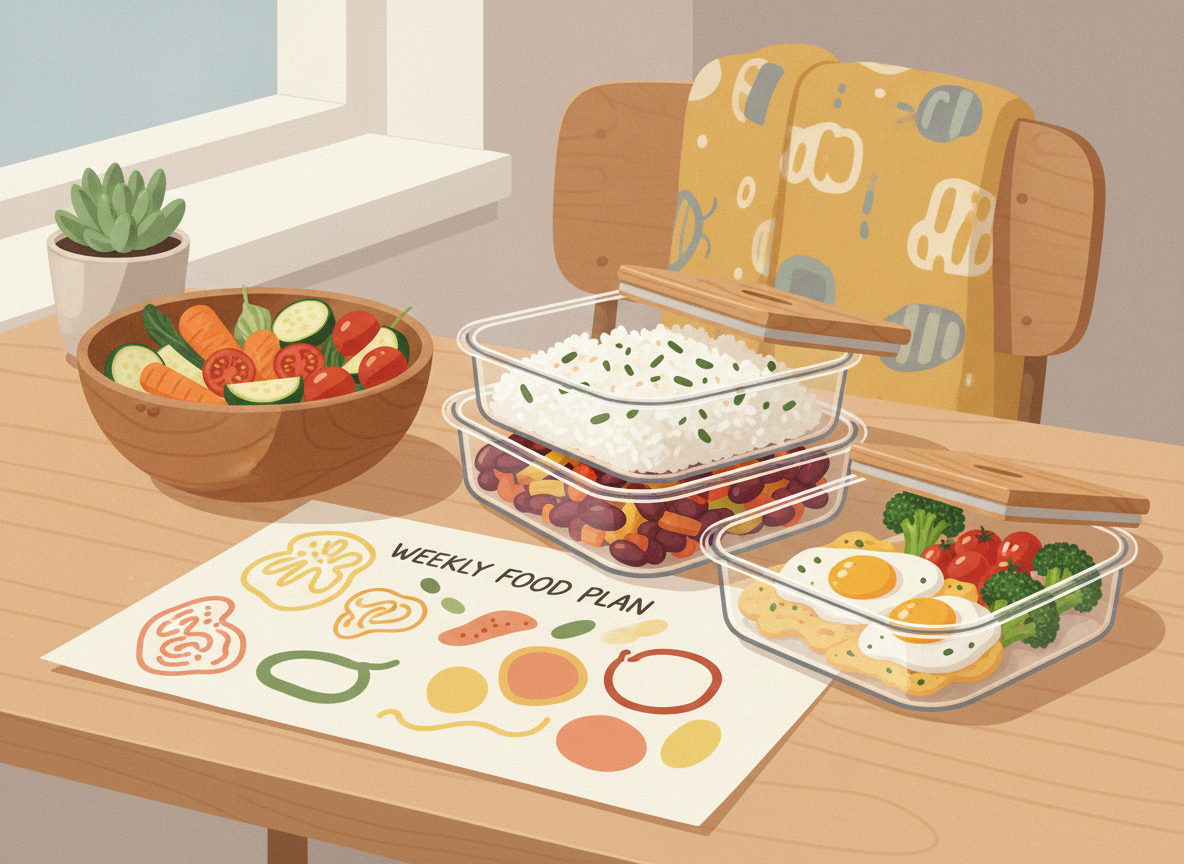
Featured image is illustrative, not a photograph of meals prepared by the author.
A student grocery plan should be cheap enough to repeat and flexible enough that you won’t abandon it by Thursday. Rather than promising a fixed daily cost that varies by city and shop, I’d plan around ingredients that can appear in several meals.
Build a small shopping list around meal components
Choose one or two starches (rice, pasta, potatoes), two protein options (such as eggs, beans, lentils or tofu), several vegetables, and seasonings you already own. Frozen vegetables can reduce waste when you cook for one. Check dietary needs and allergens before selecting substitutes.
Example two-meal rotation
| Day | Meal one | Meal two |
|---|---|---|
| Monday | Egg-and-vegetable rice bowl | Lentil tomato pasta |
| Tuesday | Bean-and-potato skillet | Rice with tofu and vegetables |
| Wednesday | Vegetable omelet with bread | Leftover lentil sauce over rice |
| Thursday | Chickpea salad and bread | Vegetable pasta with beans |
These are meal ideas, not a claim that two meals alone meet everyone’s nutritional needs. Add breakfast or snacks as your appetite, activity and dietary requirements call for them.
How to estimate the real cost per serving
For each ingredient, multiply the fraction used by its package price. Add those ingredient costs, then divide by the portions actually eaten. If a €2 package of rice provides eight equal portions, the rice contributes €0.25 per portion; vegetables, protein, oil and seasonings still need counting. Track waste too: an inexpensive ingredient thrown away isn’t economical.
Prep safely, not excessively
Cook only what you can refrigerate promptly and store safely. Follow local food-safety guidance for cooling and reheating leftovers; rice in particular should not sit at room temperature for long periods. Freeze suitable portions if you cannot eat them soon. Label containers with preparation dates and keep raw and cooked ingredients separate.
When not to buy meal-prep equipment
Start with containers you already have that close securely and are appropriate for the food temperature and intended appliance. If one leaks, read our leak-resistant lunch packing guide. Compare container materials in glass vs plastic food storage, and calculate your budget using our cost-per-meal method.
Disclosure: This article has no affiliate links.
Leave a Reply