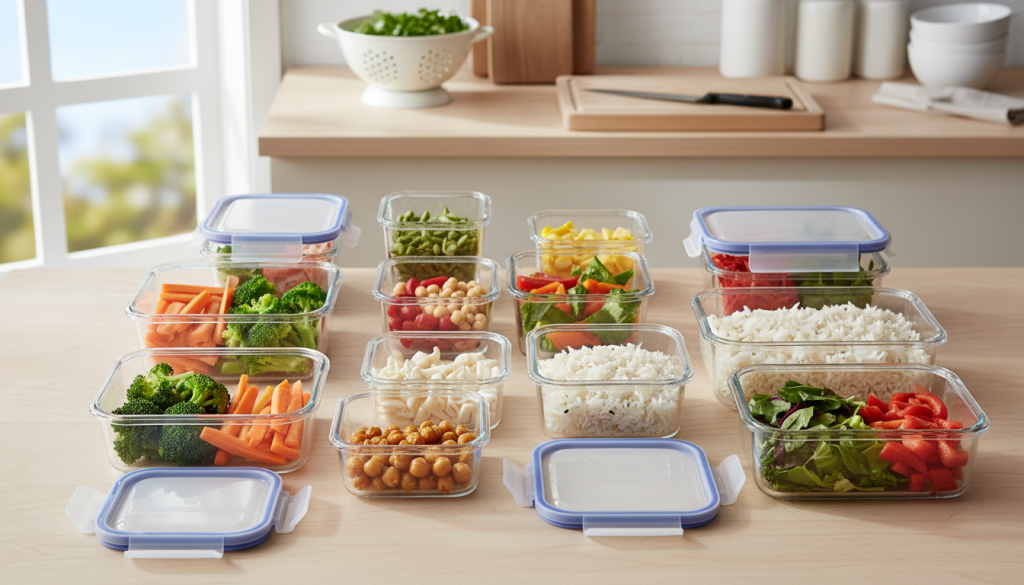

Compare glass and plastic food storage containers by weight, durability, reheating, leak resistance and actual daily use. The goal is to make a practical choice using what you have, rather than buying more products by default.
There is no single best material
Glass and plastic containers solve slightly different problems. Glass is often a convenient option for at-home leftovers because it resists staining and odors and many products can go into an oven if the manufacturer explicitly permits it. Plastic is usually lighter and less likely to shatter, making it practical for packed lunches and commuting. Shape, lid quality and care instructions can matter as much as material.
Choose glass for stationary storage and appropriate reheating
Glass can be a sensible choice if you eat mostly at home and want durable containers for strongly colored sauces. But not every glass container is oven-safe, and glass lids or plastic lids may have different limits from the bases. Check the product markings. Avoid sudden temperature changes that could cause thermal shock, and do not put an unsuitable container directly from a freezer into a hot oven.
Choose plastic when weight and portability matter
Lightweight plastic can make a difference if you carry a meal in a backpack every day. Buy containers explicitly intended for food contact and suitable for the temperature and appliance you plan to use. ‘Microwave-safe’ is a product-specific claim, not something to assume from the fact that a container is plastic. Follow local food-contact guidance and replace containers that are cracked, badly warped or no longer close securely.
Pay attention to lids and shape
A leak-resistant lid matters more than fancy styling if you transport soups or dressings. Test how easily the clips close and whether the gasket can be removed for cleaning. Rectangular boxes may use refrigerator space efficiently, while round ones may suit soups and stirring. Choose sizes that match actual portions instead of buying a large matched set that never fits your fridge.
Compare the total cost of ownership
Count how many containers you already own, not just the unit price of a new set. A sturdy container that you use hundreds of times may be better value than several cheap boxes that leak or lose their lids. But higher upfront cost is not automatically better: a simple food-safe plastic box may be the right fit for a student carrying lunches.
A quick buying checklist
Before purchasing, confirm food-contact suitability, intended temperatures, microwave or oven instructions, dishwasher guidance, ease of cleaning, lid replacements, and whether the container nests or stacks in your cupboard. Consider owning a mixed set: a couple of glass containers for home and one lightweight box for travel. For organizing food in a small kitchen, see our small-apartment kitchen tools guide.
Bottom line
Start small, check the relevant care and safety instructions, and only purchase something when it solves a recurring problem. A workable routine is more useful than a perfect-looking collection of accessories.


Leave a Reply