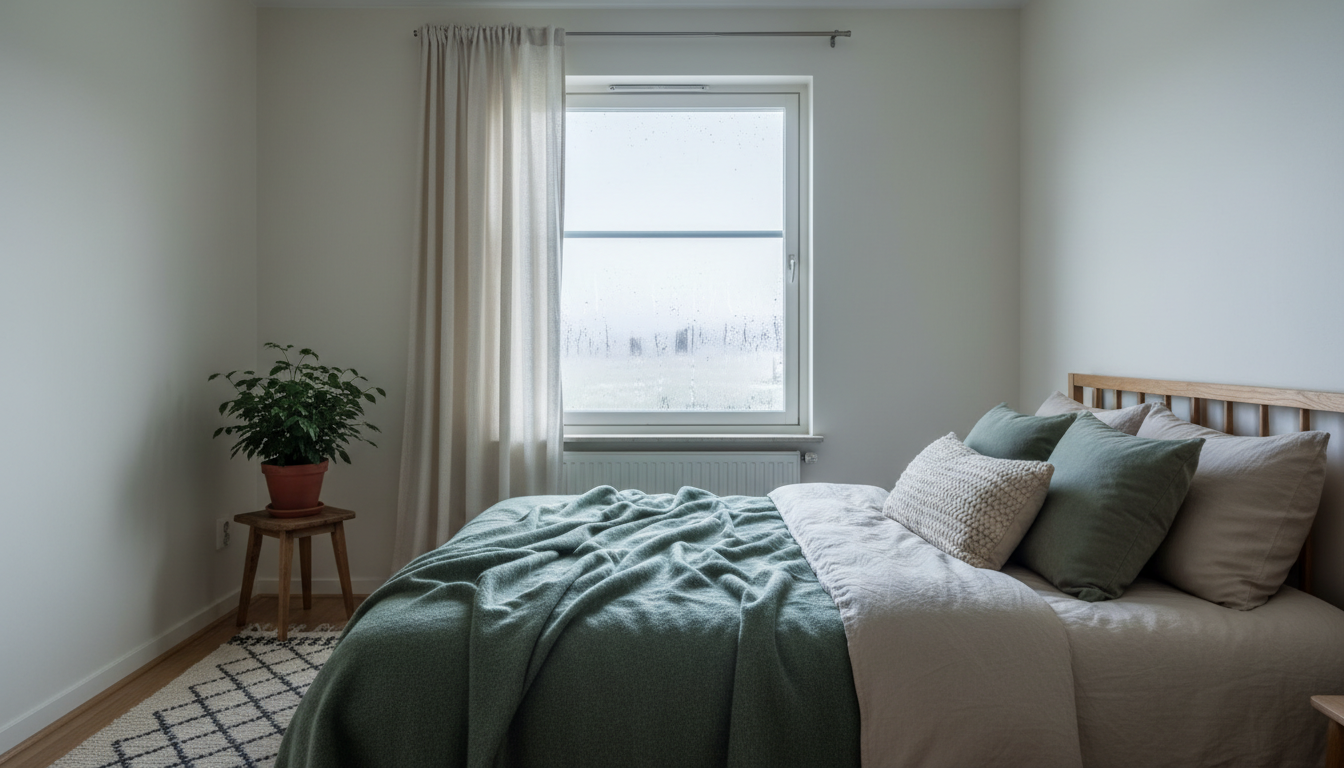
Learn why bedroom windows collect water overnight, how to reduce condensation without expensive gadgets, and how to spot a deeper damp problem.
Why windows get wet
Condensation forms when warm, moisture-laden indoor air meets a surface cold enough for water vapor to turn into droplets. Bedrooms are particularly susceptible overnight because people exhale moisture while doors and windows may remain closed. The water is not necessarily coming through the glass: it can form on the room-facing surface.
First check where the moisture is
Wipe the inside of the window with a dry cloth. If the water disappears, it is surface condensation. Moisture trapped between the panes of a sealed double-glazed unit is different: it can indicate a failed seal that wiping cannot fix. Water staining around the wall or frame may also involve leaks, so do not assume every wet patch is condensation.
A practical morning routine
Open curtains and inspect the sill each morning. Wipe visible droplets promptly, especially around wooden frames and painted surfaces. Ventilate the room using the building’s ventilation system or a brief window opening when outdoor conditions allow. Keep trickle vents unobstructed where fitted. Avoid drying wet clothes in the bedroom unless you can ventilate or remove the moisture effectively.
Balance heat and ventilation
A room that is persistently cold can encourage condensation on cold surfaces, but heating alone does not remove water vapor. Ventilation and moisture-source control work together. If you use a hygrometer, treat its reading as a trend rather than a diagnosis; sustained high relative humidity suggests checking ventilation and hidden moisture sources. Do not block purpose-built vents to save heat.
What not to buy immediately
A window vacuum or absorbent cloth may make daily cleanup easier but does not fix the underlying humidity. Small disposable moisture absorbers have limited capacity in a continuously damp room. Before buying a powered dehumidifier, identify whether the moisture is occasional window condensation or widespread dampness; check its noise, power use, tank size and suitability for the space.
When to report the problem
Tell a landlord or building manager if you notice recurring mold, damp walls, peeling paint, water entering around the frame, or condensation that persists despite reasonable ventilation. Photograph the affected areas and record when the problem occurs. Avoid painting over mold without addressing the moisture source.
Related reading
If you live in a compact room, our small-bedroom organization guide can help keep windows and vents accessible. For a practical cleaning setup, see the minimal apartment cleaning kit.
Editorial note: This is an independent informational guide. No products were tested or sponsored for this article, and no affiliate links are included.
Leave a Reply