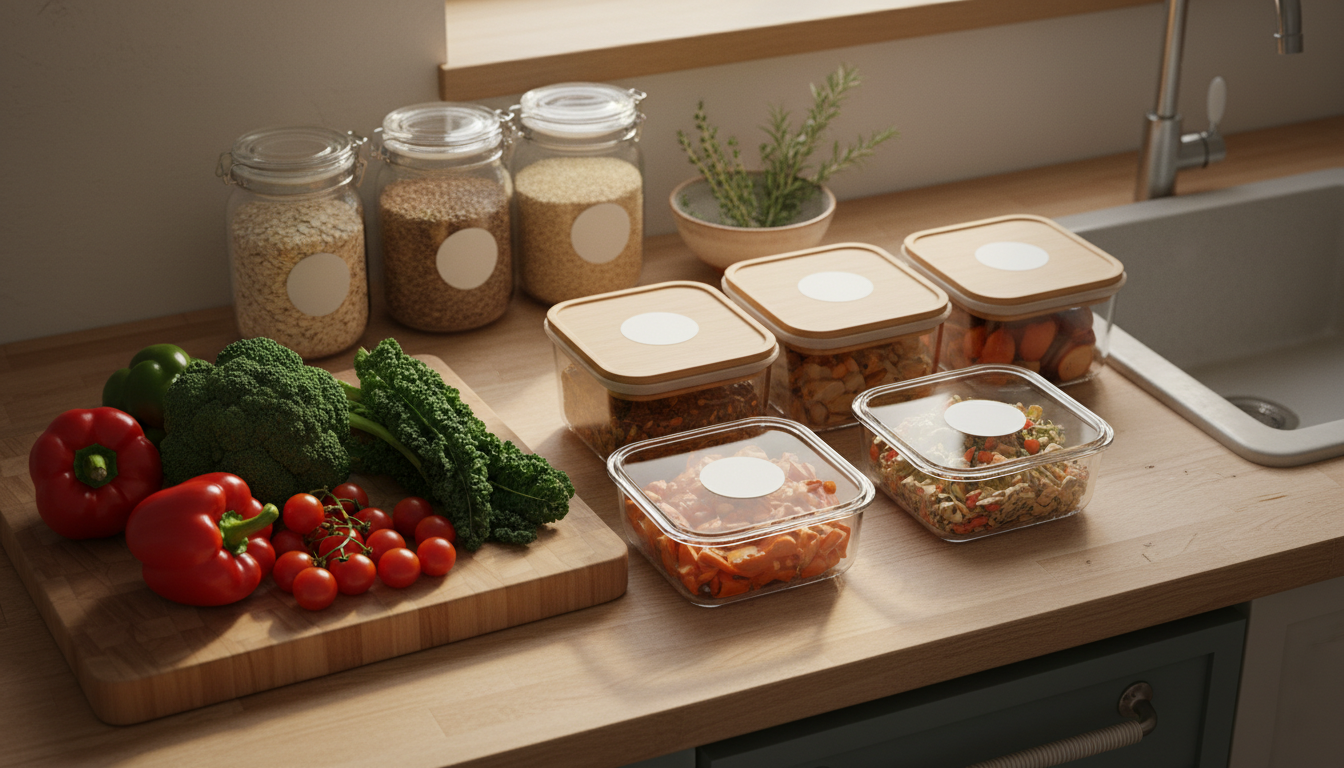

A realistic food-waste reduction routine for small kitchens: plan around what you own, store ingredients carefully, and turn leftovers into useful meals. The goal is to make a practical choice using what you have, rather than buying more products by default.
Start by shopping your kitchen
Before writing a shopping list, open your fridge, freezer and cupboards. Write down the ingredients that need using first, especially opened produce, cooked food and items close to their use-by dates. Plan two or three meals around those ingredients rather than buying a fresh set of components for every recipe. A short inventory on your phone can prevent buying another onion, jar of sauce or bag of rice you already own.
Choose flexible ingredients, not seven unrelated recipes
Build a few meals from overlapping ingredients. For example, carrots can go into a stir-fry, soup and roasted vegetable bowl; cooked beans can become a salad topping or a quick tomato-based meal. Keep one flexible meal near the end of the week for odds and ends. Buy produce in quantities you realistically eat, even if a larger pack appears cheaper per kilogram: the lower price is not a saving if half spoils.
Use a first-in, first-out shelf
Give ingredients that need attention a visible spot at the front of the fridge. Put newer purchases behind older compatible items, and check the visible shelf before cooking. Keep raw meat or poultry securely contained at the bottom to avoid drips onto ready-to-eat foods. Follow package storage instructions, and distinguish a food safety use-by date from a best-before quality date. Never taste food to decide whether it is safe.
Cool, label and store leftovers safely
Move cooked leftovers into shallow containers and refrigerate promptly rather than leaving a large hot pot on the counter for hours. The general food safety rule is to refrigerate perishable foods within two hours; sooner in very hot conditions. Keep the fridge at 4°C (40°F) or below, and reheat leftovers thoroughly. Label containers with the contents and date. As a conservative routine, use refrigerated cooked leftovers within three to four days or freeze them promptly, noting that different foods may have stricter instructions.
Try a simple weekly rhythm
On day one, plan meals and make a short list. Midweek, check perishables and move something into the freezer before it spoils. On the final day, cook a flexible leftovers meal and clean out anything no longer safe. You do not need an expensive app or a full meal-prep Sunday to make this work. A notebook, a visible shelf and one repeatable habit can help more than buying extra storage gadgets.
When to buy containers
Start with the clean food-safe containers you already have. If lids are missing or portions do not fit, consider a small set of stackable, leak-resistant containers in two or three useful sizes. Our small-apartment kitchen tools guide explains how to prioritize items that earn their space.
Bottom line
Start small, check the relevant care and safety instructions, and only purchase something when it solves a recurring problem. A workable routine is more useful than a perfect-looking collection of accessories.
More useful guides from this journal
For related practical advice, see small-kitchen tools and budgeting groceries by meal.
Leave a Reply